When two dogs just don’t get along
Dogs are complex creatures, just like us. And just like us, they may generally be fine with other members of their species, but have a problem with a certain individual.
Here are some steps and ways of thinking we can employ if (one or) two dogs that see each other often, maybe live in the same neighbourhood, building or even household, have strong reactions to each other:
Avoid repeating situations
The more a situation is repeated, the stronger and more automatic the response will be. If your dog always barks and lunges at the neigbours' dog when you walk past their garden, take a different route. After stress decreases and this association in the brain loses some of its power, your dog will be in a better position to choose a different response. Then you can reintroduce the neighbours' dog in a better way, as described below.
Use neutral terrain
Dogs are not very territorial as a species, but it is still better to introduce dogs and work on their social skills outside of their home and immediate surroundings at first. If we are adding a new dog to the family, it is a good idea to take walks somewhere else first, so the dogs may get acquainted, and when they are ready, have the resident dog welcome the new dog into the home. Similarly, if your neigbour's dog is your dog's "arch nemesis", ask the neighbour to take walks somewhere away from your homes.
Work with distance
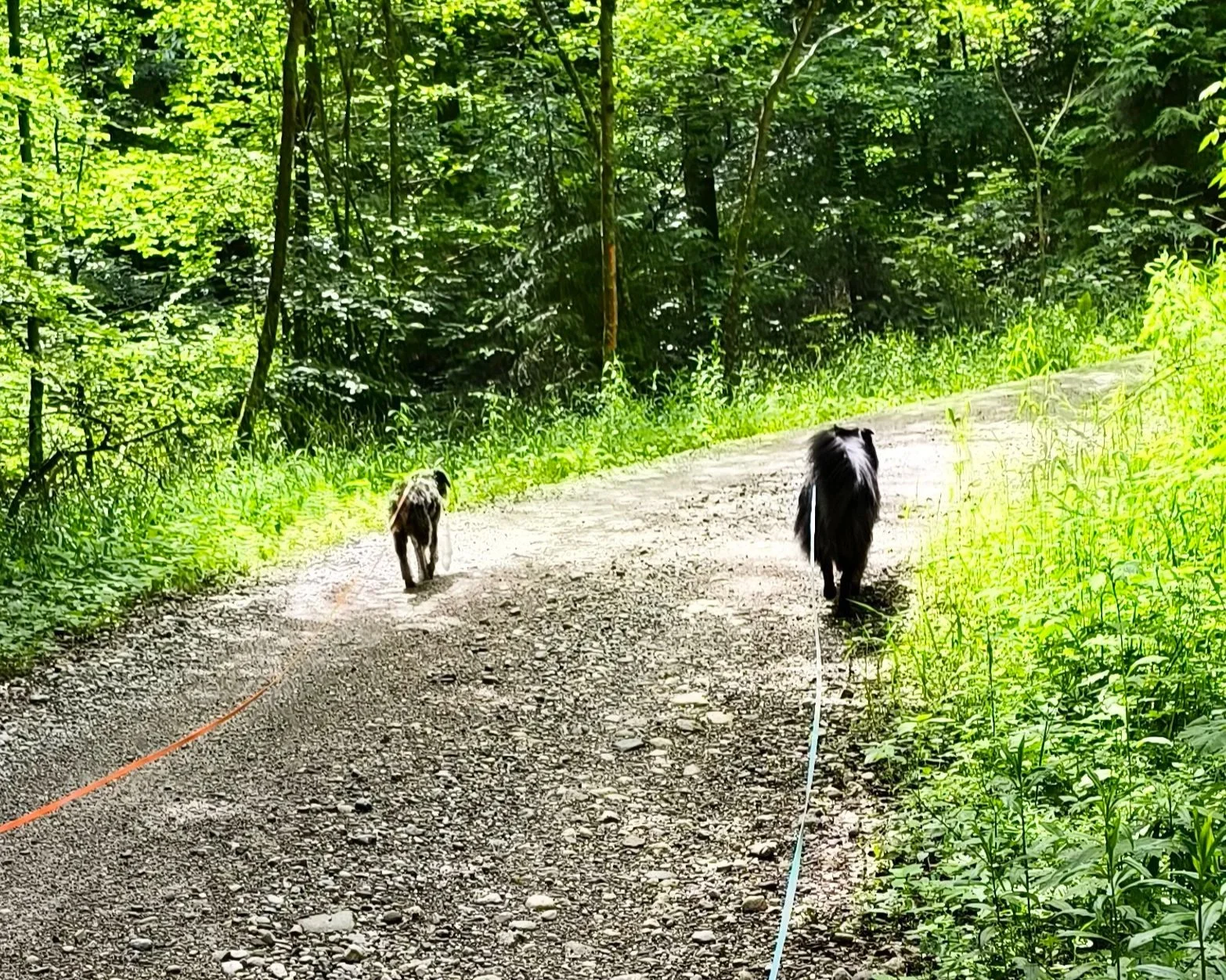
Dogs communicate through body language, which works over quite a distance. The distance helps diffuse the tension while they have conversations with each other. We often use parallel walks for introductions, relationship building and other behavioural work - read more about them here.
Remove pain or discomfort
It is very difficult to behave in a pleasant and amicable way when we are in pain! Make sure both dogs are physically as sound as possible and use comfortable equipment (harnesses, long leashes) whenever they are interacting with each other. Collars and tight leads can often cause conflict between dogs. More about this here.
Remove food or treats
Using food or treats to help dogs feel better about each other may sound like a good idea, but it is actually the opposite. It may increase tension, encourage resource guarding or just simply distract dogs when they are trying to communicate.
Communication, not commands
When we are trying to help two dogs improve their relationship, they need to be able to communicate with each other. Dogs are amazing communicators, but when we interfere with too many directions and commands, we may interrupt the process. That doesn't mean we just let them get on without paying attention, though. It is our responsibility to learn about canine communication so we can understand how they are feeling and adapt the situations accordingly.
All of these ideas may help to improve the relationship between two dogs, but each one of them comes with a lot of ifs and buts. 😉 We recommend consulting with a ethical and knowledgeable dog behaviour expert that will be able to explain the situation and guide you and your dog(s) to the best possible outcome.
We also offer online behaviour consultations.